⚡ Basic principle of electrostatic powder coating and how it works
Electrostatic powder coating uses electric charge to attract dry powder to a grounded metal part. The powder then melts and cures, forming a hard, even protective film.
This clean, efficient process cuts waste, improves coating quality, and supports modern, eco‑friendly production lines for metal products in many industries.
1. What is electrostatic powder coating?
It is a finishing method that sprays charged powder onto grounded parts with an Electrostatic Powder Spray Gun. The charged particles stick to the surface, then cure into a continuous coating.
- Uses no solvent
- Produces low emissions
- Gives thick, even layers in one pass
2. How the charging process works
The spray gun applies a high voltage to the powder, giving each particle a negative charge. The metal workpiece is grounded, creating attraction between powder and surface.
| Element | Role |
|---|---|
| High voltage | Charges powder particles |
| Grounding | Pulls particles to the part |
| Air flow | Transports powder cloud |
3. Deposition and coverage
Charged powder wraps around edges and complex shapes. The electric field helps reduce bare spots and gives better corner and recess coverage than wet paint.
- Good edge build
- High transfer efficiency
- Smooth appearance with fewer runs
4. Melting and curing
After spraying, parts move into an oven. Heat melts the powder, then crosslinking forms a dense, durable film with strong adhesion to the substrate.
| Stage | Typical Result |
|---|---|
| Gel | Powder melts and flows |
| Cure | Hard film develops |
🎯 Main advantages of electrostatic powder coating over traditional liquid paint
Compared with liquid paint, electrostatic powder coating improves durability, cuts emissions, and reduces operating cost by saving material and simplifying waste handling.
It supports modern lean production and helps meet strict environmental rules while still giving high decorative and protective performance.
1. Higher durability and performance
Powder coatings resist impact, corrosion, and chemicals better than many liquid paints, making them ideal for outdoor and industrial products exposed to harsh conditions.
- Thicker single coat
- Excellent chip resistance
- Strong UV and weather stability
2. Environmental and safety benefits
Because the process uses no solvent, volatile organic compound (VOC) emissions are very low. This improves workplace air and reduces fire and health risks.
| Item | Powder | Liquid Paint |
|---|---|---|
| VOC level | Very low | Medium–high |
| Overspray reuse | Yes | Usually no |
3. Cost and material savings
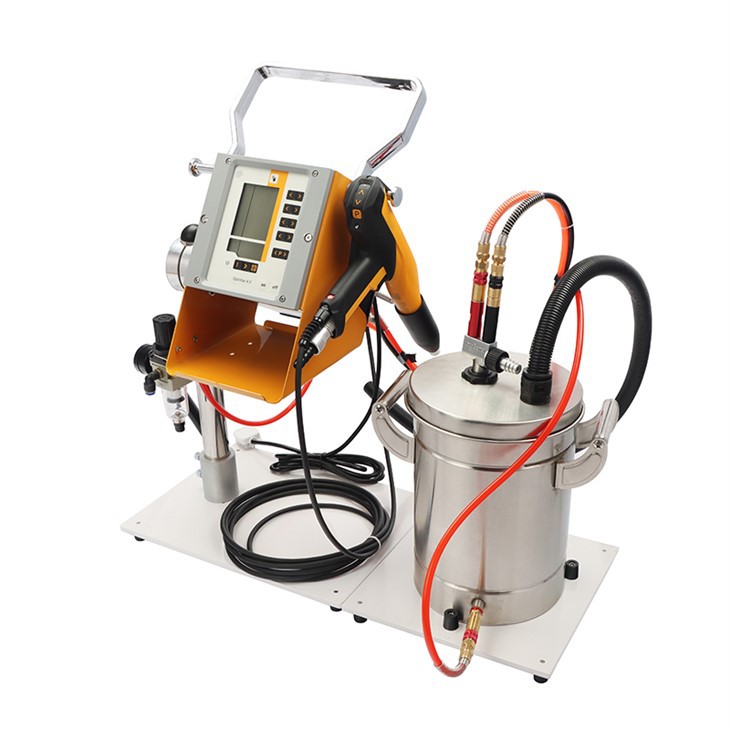
High transfer efficiency and reclaim of overspray reduce material loss. Systems like the ONK-851 Manual Powder Coating Machine With 45L Hopper help control flow and powder use precisely.
4. Consistent, high-quality finish
Electrostatic attraction and controlled curing give smooth, uniform films with fewer defects. Color and gloss stay stable from batch to batch.
- Minimal runs and sags
- Good color repeatability
- Attractive, modern finish
🛡️ Typical applications of electrostatic powder coating in industry and daily life
Electrostatic powder coating protects and decorates many metal products, from industrial machinery to home appliances and outdoor furniture.
Its strong finish and flexible colors make it a preferred option for both mass production and custom work.
1. Automotive and transportation
Many car, truck, and rail components use powder coating for rust resistance and style, including wheels, frames, roof racks, and underbody parts.
- Chassis and suspension parts
- Alloy wheels
- Cab racks and steps
2. Construction, machinery, and equipment
Structural steel, agricultural machines, and factory equipment rely on powder coatings for long-term protection against wear, moisture, and chemicals.
| Sector | Typical Coated Items |
|---|---|
| Construction | Railings, fences, panels |
| Machinery | Frames, guards, covers |
3. Consumer goods and home products
Appliances, metal furniture, and fitness equipment often use powder coatings to achieve durable, easy-to-clean surfaces in modern colors and textures.
- Refrigerators and ovens
- Office furniture
- Garden and patio sets
🔧 Key process steps in an electrostatic powder coating production line
A complete powder coating line includes surface preparation, electrostatic spraying, curing, and quality checks to ensure adhesion and appearance.
Well-managed steps improve throughput, reduce rework, and keep production stable and efficient.
1. Surface cleaning and pretreatment
Parts must be free of oil, rust, and dust. Cleaning and chemical pretreatment raise corrosion resistance and help the coating bond well.
- Degreasing
- Rinse and conversion coating
- Drying before spraying
2. Powder spraying and recovery
Operators or robots spray parts in a booth. Powder Coating Booth Filters and recovery systems capture overspray for reuse.
| Stage | Main Goal |
|---|---|
| Spraying | Even coating build |
| Recovery | Save powder and keep air clean |
3. Curing and quality inspection
After oven curing, staff check film thickness, gloss, and adhesion. Regular tests keep coating performance and appearance under control.
- Oven temperature tracking
- Thickness gauge checks
- Adhesion and impact tests
🏭 Why choose OUNAIKE for reliable electrostatic powder coating solutions
OUNAIKE provides integrated electrostatic powder coating systems that help users upgrade quality, save energy, and meet strict safety and environmental rules.
From manual units to full lines, solutions aim at stable performance and simple daily operation.
1. Complete product portfolio
OUNAIKE offers spray guns, control units, booths, filters, and curing ovens to build or upgrade powder coating lines for many plant sizes.
- Manual and automatic guns
- Flexible booth layouts
- Matched powder feed systems
2. Focus on efficiency and stability
Equipment design targets high transfer efficiency, fast color change, and low downtime, helping reduce running costs and increase coating throughput.
| Benefit | Result |
|---|---|
| Stable output | Uniform film build |
| Smart control | Easy parameter setting |
3. Technical support and service
OUNAIKE supports users with layout planning, training, and after-sales service, helping teams run safe, consistent, and efficient coating operations.
- Process optimization advice
- Spare parts and upgrades
- On-site and remote support
Conclusion
Electrostatic powder coating offers a clean, strong, and cost-effective way to protect and decorate metal products. It replaces many liquid paint jobs with safer, greener solutions.
By understanding process steps, key equipment, and proper control, manufacturers can gain stable quality, lower waste, and reliable long-term performance.
Frequently Asked Questions about electrostatic powder coating technology
1. Can electrostatic powder coating be applied to non-metal materials?
It works best on conductive metals. With special primers and equipment, some heat-resistant non-metals can be coated, but process control becomes more complex.
2. How thick is a typical powder coating layer?
Most architectural and industrial parts use 60–120 microns of cured film. Thicker layers are possible for heavy-duty or highly textured finishes.
3. Do I always need an oven for curing?
Yes. Heat is required to melt and cure the powder into a solid film. Curing ovens may be gas, electric, or infrared depending on the line.
4. How long does powder-coated metal usually last outdoors?
With proper pretreatment and suitable powder type, outdoor life can range from 5 to more than 15 years, depending on climate and exposure level.