Tired of your powder coating line acting like a moody teenager—perfect one day, patchy and clumpy the next? From hopper burps to mystery orange peel, it can feel like your parts are riding a defective carnival ride.
You fix this circus by understanding every step: steady fluidizing in the hopper, consistent charging and spray, clean airflow in the booth, then a correctly profiled cure cycle. Follow process controls and testing methods from this NIST powder coating performance report to lock in repeatable, professional results.
🔧 Powder Hopper Basics: Fluidization, Airflow, and Consistent Powder Feed
Powder coating systems start in the hopper, where air and vibration turn compact powder into a smooth, flowing “fluidized” bed for stable spraying.
Good hopper design keeps powder dry, steady, and easy to control, which reduces color change time, waste, and coating defects on all metal parts.
1. How Fluidization Keeps Powder Moving
In a fluidized hopper, air passes through a porous plate and lifts powder so it behaves like a liquid. This smooth flow helps guns feed powder without pulsing.
- Use dry, clean air to prevent clogs.
- Adjust pressure until the powder “boils,” not blows out.
- Keep hopper level and well sealed.
2. Airflow and Powder Density Control
Airflow sets powder density and feed rates. Too much air gives poor charge; too little air causes surging and rough finishes.
| Setting | Effect |
|---|---|
| Low airflow | Heavy, uneven feed, orange peel risk |
| Balanced airflow | Stable cloud, consistent film build |
| High airflow | Overspray, low transfer efficiency |
3. Choosing the Right Hopper or Feed Box
Automatic lines often use a feed box system to keep guns supplied and cut manual handling. This supports quick color changes and clean operation.
The Feed Box Powder Coating Equipment With Trolley lets operators move, refill, and clean powder feed stations fast, which is ideal for high‑mix plants.
4. Vibrating Trolleys for High‑Volume Lines
For large batches, vibrating trolleys transfer powder from cartons or drums into the system with less waste and labor.
- Direct feed from box reduces contamination risk.
- Strong vibration keeps powder loose and stable.
- Mobile design simplifies layout changes.
🎯 Electrostatic Charging: How Guns Charge Powder for Uniform Attraction to Metal
After the hopper, powder moves to the spray gun, where electrostatic power charges each particle so it clings to grounded metal surfaces.
Correct voltage, air mix, and gun type increase transfer efficiency, reduce overspray, and deliver a smooth, even film in fewer passes.
1. Corona and Tribo Charging Basics
Corona guns use high voltage to charge powder in an electric field, while tribo guns use friction inside the gun barrel to build charge.
| Type | Benefits | Notes |
|---|---|---|
| Corona | Flexible, common, easy to adjust | Watch Faraday cage areas |
| Tribo | Soft wrap, reduced back‑ionization | Needs tribo‑grade powders |
2. Key Gun Settings for Stable Charging
Voltage, current limit, and powder output must match part size and geometry. Start with moderate settings and fine‑tune to cut defects.
- Use lower kV near edges and recesses.
- Limit current to prevent back‑ionization.
- Balance powder and air for a soft spray cloud.
3. Data‑Driven Optimization of Transfer Efficiency
Plants can track powder use, reclaim, and part coverage to tune their system and cut cost per square meter coated.
4. Selecting an Electrostatic Powder Coating Machine
A modern gun system gives precise control, stable charge, and easy presets for different jobs and powders.
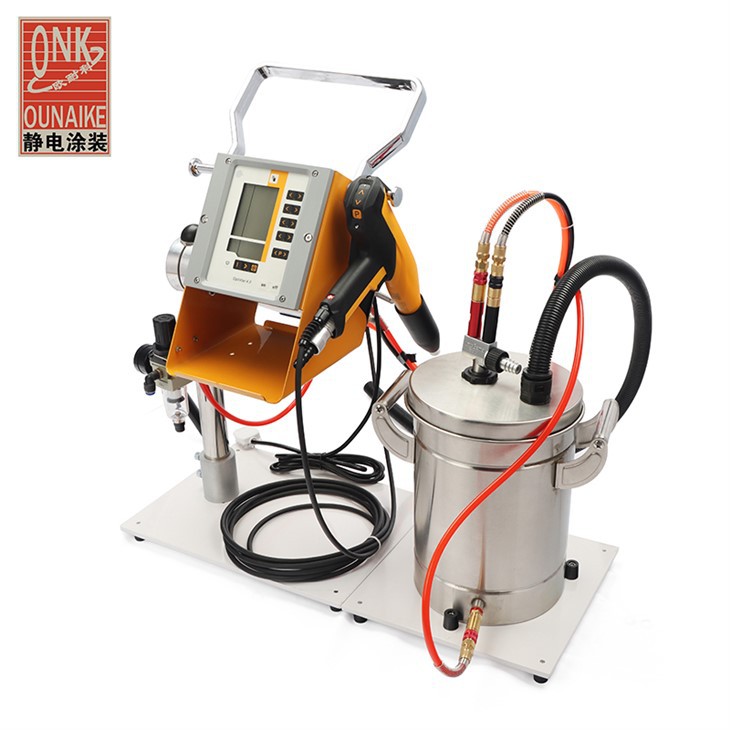
The Gema Optiflex Metal Electrostatic Powder Coating Machine offers programmable recipes, fast color change, and strong, repeatable charging for both manual and automatic booths.
🧲 Powder Deposition: Controlling Film Build, Edges, and Hard‑to‑Reach Areas
Powder must deposit in a controlled way so flat panels, sharp edges, and deep recesses all receive proper film build without runs or thin spots.
1. Managing Film Thickness
Film build depends on gun distance, speed, and output. Use test panels and gauges to hold thickness within the powder maker’s window.
- Keep gun 15–25 cm from the part.
- Overlap passes for even coverage.
- Adjust output, not speed, when possible.
2. Treating Edges and Corners
Sharp edges tend to attract more charge and coat heavy, which can lead to chipping. Round edges and control kV around corners.
| Issue | Action |
|---|---|
| Heavy edges | Lower kV, reduce powder output |
| Bare edges | Improve grounding, pre‑sand radius |
3. Reaching Recesses and Faraday Cage Zones
Pockets and deep channels resist powder entry due to electric fields. Use lower voltage and gentle spray to push powder inside.
- Angle the gun slightly into recesses.
- Use short bursts, not long, direct blasts.
- Consider dedicated touch‑up passes.
🔥 Curing Process: Oven Profiles, Crosslinking, and Achieving Durable Coatings
In the oven, powder melts, flows, and crosslinks into a hard, durable film. Correct time and temperature ensure full cure and strong performance.
1. Understanding Metal Temperature and Oven Profile
Oven setpoint is not enough; the important factor is true part metal temperature, which must stay in the cure window for the full required time.
- Use data loggers on real parts.
- Check thick and thin areas separately.
- Adjust conveyor speed to match load.
2. Crosslinking and Coating Performance
Proper crosslinking gives chemical resistance, gloss stability, and impact strength. Under‑cure or over‑bake both reduce long‑term durability.
| Condition | Result |
|---|---|
| Under‑cure | Soft film, poor adhesion |
| Correct cure | Full hardness, design gloss |
| Over‑bake | Color shift, brittle film |
3. Verifying Cure Quality
Simple shop tests confirm cure on production parts. Regular checks catch issues before parts ship to the customer.
- Solvent rub test for cure level.
- Cross‑hatch adhesion test.
- Impact and bend checks on samples.
🏭 System Integration: Efficient Lines Using OUNAIKE Equipment from Hopper to Cure
A well‑designed powder line links hoppers, guns, booths, and ovens into one smooth system, cutting downtime and coating costs.
1. Coordinating Feed, Guns, and Booths
Integrating feed boxes, vibrating trolleys, and spray controls lets operators react fast to color changes and production shifts with less waste.
The Professional Vibrating Trolley Metal Powder Coating Machine improves powder flow and supply stability, which supports consistent gun output across multiple booths.
2. Automation and Line Balancing
Automatic guns, part sensing, and conveyor speed control keep film build steady while maintaining target throughput across prep, coating, and curing zones.
- Use part detection to trigger guns.
- Match booth capacity to oven size.
- Reduce manual touch‑up with smart recipes.
3. Maintenance and Continuous Improvement
Routine checks on pumps, hoses, filters, and grounding points keep systems reliable. Data from rejects and powder use guides ongoing improvements.
| Area | Check |
|---|---|
| Hoppers | Clean screens and plates |
| Guns | Inspect nozzles and cables |
| Ovens | Verify airflow and temperature |
Conclusion
From hopper fluidization to final cure, each step in a powder coating system shapes finish quality, efficiency, and cost.
By tuning airflow, charging, deposition, and oven profiles, and by using integrated equipment, plants can produce durable, attractive parts with less waste.
Frequently Asked Questions about best powder coating system
1. What makes a powder coating system “best” for my shop?
The best system fits your part size, volume, and colors. It should provide stable powder flow, easy settings, fast color change, and reliable cure with low scrap.
2. Do I need automatic guns, or are manual guns enough?
Manual guns work for low volume or complex parts. Automatic guns suit higher volumes, repeat work, and straight parts where consistent coverage is vital.
3. How important is reclaim in choosing a system?
If you spray large volumes in a few colors, reclaim can save a lot of powder. For frequent color change, focus on quick‑clean designs instead of reclaim.
4. How can I tell if my oven is curing correctly?
Use temperature loggers on real parts, then run simple solvent rub and adhesion tests. Adjust oven temperature and conveyor speed based on these results.
5. How often should I service my powder coating equipment?
Inspect hoppers, pumps, guns, and booths daily for buildup and wear. Plan deeper cleaning and checks weekly or monthly, depending on hours and powder type.